Wednesday, October 6, 2010

Tuesday, October 5, 2010
Treansallagh Townland:: OS grid C3008 :: Geograph Ireland - photograph every grid square!
Treansallagh Townland:: OS grid C3008 :: Geograph Ireland - photograph every grid square!:
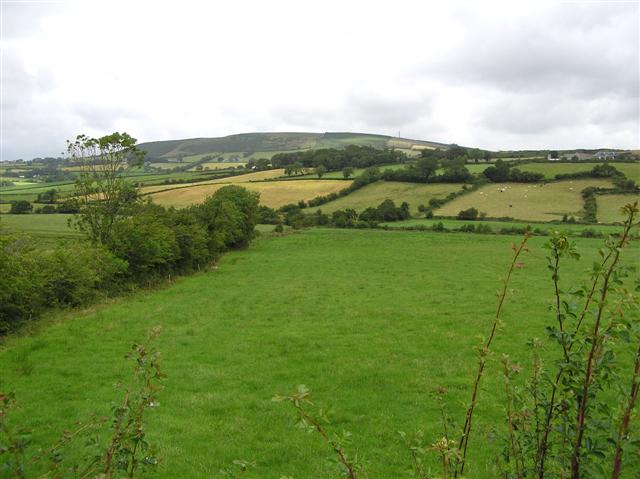 |
Treansallagh Townland
Looking north towards Trentagh Mucklagh
"C3008 : Treansallagh Townland near to Ardagh, Treantagh, Heatheryhill and Lismoghry, Donegal, Ireland"
© Copyright Kenneth Allen and licensed for reuse under this Creative Commons Licence
© Copyright Kenneth Allen and licensed for reuse under this Creative Commons Licence
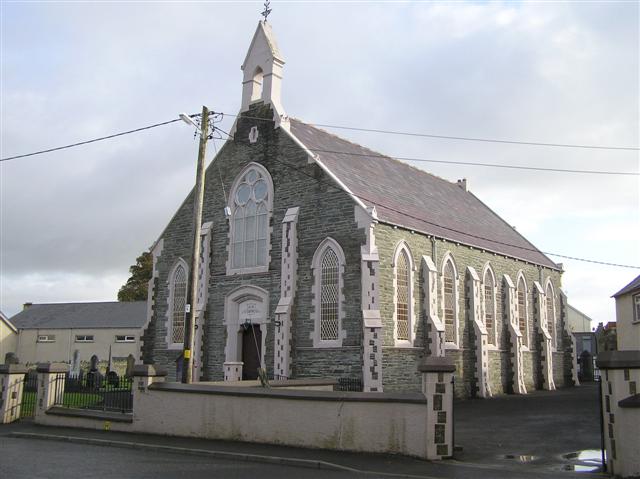
Newtownrcunningham Presbyterian Church
"C3016 : Newtownrcunningham Presbyterian Church near to An Baile Nua, Killyverry, Plaster, Mill Town and Gortree, Donegal, Ireland":
 Built in 1881, it is located on the outskirts of the town.

Church of All Saints, Newtown Cunningham:: OS grid C3116 :: Geograph Ireland - photograph every grid square!
Church of All Saints, Newtown Cunningham:: OS grid C3116 :: Geograph Ireland - photograph every grid square!:


"C3116 : Church of All Saints, Newtown Cunningham near to An Baile Nua, Castleforward, Plaster, Killyverry and Roosky, Donegal, Ireland"
St Johnston Presbyterian Church:: OS grid C3409 :: Geograph Ireland - photograph every grid square!
St Johnston Presbyterian Church:: OS grid C3409 :: Geograph Ireland - photograph every grid square!:
"St Johnston Presbyterian Church near to Baile Suingean, Tullyonven, Dernacally, Treantagh and Whitehill, Donegal, Ireland"
 |
Tonagh Townland:: OS grid C3512 :: Geograph Ireland - photograph every grid square!
Tonagh Townland:: OS grid C3512 :: Geograph Ireland - photograph every grid square!:

"Tonagh Townland near to An Carraigin, Cloon, Dernacally, Church Town and Kildrum, Donegal, Ireland"
© Copyright Kenneth Allen and licensed for reuse under this Creative Commons Licence

"Tonagh Townland near to An Carraigin, Cloon, Dernacally, Church Town and Kildrum, Donegal, Ireland"
© Copyright Kenneth Allen and licensed for reuse under this Creative Commons Licence
Cross Townland near to Listicall, Tober, Cross, Church Town and Gortree, Donegal, Ireland


� � Copyright Kenneth Allen and licensed for reuse under this Creative Commons Licence"
The Old Farmstead at Tiroddy, Taughboyne

"This old farmhouse, which for many decades has been used as a barn is next door to its Classical Georgian style replacement, which in its turn is also now abandoned.
� � Copyright Boyd Gray and licensed for reuse under this Creative Commons Licence"
Monday, October 4, 2010
Ireland, Tithe Applotment Books, 1824-1837 - Ancestry.com
Ireland, Tithe Applotment Books, 1824-1837 - Ancestry.com
Source Information
Heritage World and the Genealogical Publishing Company. Ireland, Tithe Applotment Books, 1824-1837 [database on-line]. Provo, UT, USA: The Generations Network, Inc., 2008.
Original data: Tithe applotment books for Northern Ireland, 1823-1828. National Archives, Dublin and Public Record Office of Northern Ireland.
Original data: Tithe applotment books for Northern Ireland, 1823-1828. National Archives, Dublin and Public Record Office of Northern Ireland.
About Ireland, Tithe Applotment Books, 1824-1837
Historical Background:
The Tithe Applotment Books record the results of a unique land survey taken to determine the amount of tax payable by landholders to the Church of Ireland, the established church until 1869. They are known as the Tithe Applotment Books because the results of this land survey were originally compiled in nearly 2,000 hand-written books. This data set represents a virtual census for pre-Famine Ireland. Since it covers all of Ireland it is immensely important in terms of constructing, not just an image of a particular family line, but of wider social conditions in the country.
In the original enumeration, each landholder was recorded along with details such as townland, size of holding, land quality and types of crops. The amount of tithe payable by each landholder was based on all of these factors and calculated by a formula using the average price of wheat and oats from 1816-23. Most parishes had at least one tithe survey from 1820-38 while some had two or more. The results of each were carefully laid out in a large book prepared for the purpose, hence the title by which this archive is known to genealogists — the Tithe Applotment Books. Some parts of the country were exempt from paying tithe, among them glebe lands (land occupied by established clergymen), granges (land which in pre-Reformation times had belonged to a monastery) and all towns.
About this Database:
Information from the Tithe Books has been extracted and the names have been indexed in this data set. Only the six counties that constitute present-day Northern Ireland – Antrim, Armagh, Derry, Down, Fermanagh, and Tyrone, covering 223 parishes, are included. If you find an ancestor among the nearly 200,000 listed, you will learn the following:
- Name
- County
- Parish
- Townland
- Year of enumeration
About the Tithe Books:
The Tithe Applotment Books are not comprehensive and some parts of the country were not surveyed. It should not be assumed that these 'exceptions' from the tithe survey were due to parishes being overlooked since there are usually explanations as to why they were tithe-free. In some cases there are no tithe books because a certain parish did not exist, or was part of another parish, at the time of the survey. There were also some parishes outside parochial jurisdiction, such as the above-mentioned granges, while glebe lands and all towns were also exempt. Details of exceptions are provided below:
- County Antrim Parishes
- Glynn: names of landowners only
- Glenwhirry: no agricultural land worth assessing
- Granges of Ballyscullion, Doagh, Inispollan, Layd, Muckamore: all tithe-free
- Grange of Drumtullagh: tithe entries in applotment book for Derrykeighan parish
- Grange of Nilteen: originally included in applotment book for Donegore parish
- Shankill: tithe applotment entries entered in Belfast parish
- County Armagh Parishes
- Armagh: names of leaseholders for five townlands only
- Kilclooney [Kilcluney]: tithe entries in applotment book for Mullaghbrack parish
- Kildarton: formed 1840; tithe entries in Armagh, Lisnadill, Loughgall and Mullaghbrack
- County Derry Parishes
- Agivey: described as 'extra-parochial'
- Carrick: formed 1846; tithe entries in Balteagh, Bovevagh and Tamlaght Finlagan parishes
- Formoyle [Fermoyle]: formed 1843; tithe entries in Dunboe parish
- Learmount: formed 1831; tithe entries in Banagher, Cumber Upper and Cumber Lower
- Templemore: tithe entries to be found in Deanery of Derry
- County Down Parishes
- Castleboy: tithe-free
- Holywood: former site of priory, and records show that no tithes were ever taken here
- Killaney: no tithe applotment book exists
- Newry: no tithe applotment book exists
- Warrenpoint: formed 1825; tithe entries found in applotment book for Clonallen parish
- County Fermanagh Parishes
- Devenish: tithe survey (1824) gives only townland names and a few large landowners.
- Clones and Currin: tithe entries in County Monaghan
- Kinawley and Tomregan: tithe entries in County Cavan
- Templecarn: tithe entries in County Donegal
- County Tyrone Parishes
- Donaghedy [Donagheady]: no tithe applotment book exists
- Errigal Trough: tithe entries in County Monaghan
- Urney: tithe entries in County Donegal
Church of Ireland Guide to National Archives of Ireland
Guide to National Archives of Ireland
The Church of Ireland
From the period of the Reformation in the sixteenth century until 1870, the Protestant Church of Ireland was an Established Church, a virtual arm of state with civil as well as religious powers and functions. Other records associated with the Church of Ireland include Tithe Applotment Books. For a general account of the records of this Church, see Raymond Refaussé, 'The Archives of the Church of Ireland: an Introduction', Irish Archives Bulletin, 11, 1981, pages 3-11.
Diocesan Records
Under the Public Records (Ireland) Act 1867, the records of the Prerogative and Consistorial or Diocesan Courts of the Church of Ireland were declared to be public records. Almost all of the records deposited were destroyed in 1922. For details of Prerogative and Diocesan Wills and Administrations, see Testamentary Records, and see also Miscellaneous Ecclesiastical Records.
The Prerogative and Consistorial or Diocesan Courts could issue Marriage Licences to those who did not wish to pursue the method of having banns called. The original Marriage Licences and accompanying Bonds were destroyed in 1922, but the Prerogative and Diocesan indexes to the Bonds have survived, and for convenience are shelved with the testamentary indexes (Case 8). The Betham Abstracts contain details of Prerogative Marriage Licences 1629-1801 and of Dublin Diocese Marriage Licences 1660-1824. Abstracts of Killaloe Diocese Licences are held in the Genealogical Office, and of Ossory Diocese Licences in the Representative Church Body Library. From 1845 the state registered Non-Catholic marriages, and from 1864 marriages of all denominations were registered (see General Register Office).
Under the Public Records Act 1867, an amendment of 1875 and the Parochial Records Act 1876, Church of Ireland parish registers of marriages prior to 1845 and of baptisms and burials prior to 1871 were declared to be public records. However, registers could be retained in parochial custody if an adequate place of storage was available. The registers of all but four of the 1,006 parishes deposited in the Public Record Office of Ireland were destroyed in 1922. The registers of 637 parishes in local custody fortuitously survived, and in addition transcripts of or extracts from destroyed registers are available in the case of some other parishes.
While repealing the Acts of 1875 and 1876, the National Archives Act 1986 effectively confirmed the status of Church of Ireland Parish Registers as public records. The National Archives is in the process of completing the making of microfilm copies of surviving Church of Ireland parish registers, but not all of these are yet accessible to the public (see card index of available copies). The Public Record Office of Northern Ireland in Belfast holds microfilm copies of nearly all surviving registers for the Six Counties. A growing number of surviving original registers is in the Representative Church Body Library in Dublin, while others remain in local parochial custody.
The standard, but by no means complete, guide is the National Archives Guide to Parochial Records of the Church of Ireland (typescript), a partly updated version of which is Noel Reid Editor, A Table of Church of Ireland Parochial Records and Copies, Naas 1994. See also Public Record Office of Northern Ireland, An Irish Genealogical Source: Guide to Church Records, Belfast 1974. For further information see Raymond Refaussé, 'Records of the Church of Ireland', in J G Ryan Editor, Irish Church Records, Dublin 1992.
Parochial Returns
In connection with visitations by bishops, clergy not infrequently prepared returns of baptisms, marriages and burials within their parishes for given periods. Most of these Parochial Returns were destroyed in 1922, and only four are now held in the National Archives. For copies of Visitation Returns and other records, see Miscellaneous Ecclesiastical Records.
Vestry Minutes
Vestry Minute Books and other parish records not containing entries of baptisms, marriages and burials were deemed not to be public records. A considerable number of earlier parish registers containing vestry entries were destroyed in 1922, and many other vestry records had been lost before that date. Vestry records also reflect the role of the parish in local government, dealing with repair of roads, poor relief and other matters, and in some cases contain lists of householders liable to pay cess, a parochial tax. Some surviving Vestry Minute Books have been deposited in the Representative Church Body Library and the Public Record Office of Northern Ireland.
Church Temporalities Commission
No details available of deposited records.
Sunday, October 3, 2010
YouTube - Stranorlar, County Donegal
YouTube - Stranorlar, County Donegal
http://www.donegalcottageholidays.com
Stranorlar (Srath an Urláir in Irish) is a small town in County Donegal which forms one of the "twin towns" of Stranorlar/Ballybofey on either side of the River Finn.Finn Valley Athletics Club have their track in the town. For nearly 100 years, Stranorlar was the headquartes of the County Donegal Railway system (originally, the Finn Valley Railway), with services to Derry and Letterkenny via Strabane (near Castlefin), to Ballyshannon and Killybegs via Donegal, and to Glenties. At its peak the railway had 130 employees. The last train ran from Stranorlar in 1959. There is an interesting old Church of Ireland church and nearby the Lough Alann bird sanctuary. Stranorlar is home to Stranorlar Vocational School and St. Columbas College, both highly rated secondary schools.Ballybofey is home to both the County Gaelic Football pitch and Finn Harps, the premier Division Soccer Club. Sport is a veritable passion in the Finn Valley area and there are regular matches held throughout the season. The area is also home to the prestigious Finn Valley Athletics Club, renowned through out Europe for the Quality of its athletes. Ballybofey and Stranorlar are a haven for the visiting angler as the River Finn, and its main tributary the Reelin River, is renowned for the quality of their salmon fishing. The Finn, a tributary of the Foyle system, is a prolific run of both spring salmon and summer grilse. Large numbers of anglers are attracted to the area every season in search of, 'Salmon the Leaper'
Stranorlar (Srath an Urláir in Irish) is a small town in County Donegal which forms one of the "twin towns" of Stranorlar/Ballybofey on either side of the River Finn.Finn Valley Athletics Club have their track in the town. For nearly 100 years, Stranorlar was the headquartes of the County Donegal Railway system (originally, the Finn Valley Railway), with services to Derry and Letterkenny via Strabane (near Castlefin), to Ballyshannon and Killybegs via Donegal, and to Glenties. At its peak the railway had 130 employees. The last train ran from Stranorlar in 1959. There is an interesting old Church of Ireland church and nearby the Lough Alann bird sanctuary. Stranorlar is home to Stranorlar Vocational School and St. Columbas College, both highly rated secondary schools.Ballybofey is home to both the County Gaelic Football pitch and Finn Harps, the premier Division Soccer Club. Sport is a veritable passion in the Finn Valley area and there are regular matches held throughout the season. The area is also home to the prestigious Finn Valley Athletics Club, renowned through out Europe for the Quality of its athletes. Ballybofey and Stranorlar are a haven for the visiting angler as the River Finn, and its main tributary the Reelin River, is renowned for the quality of their salmon fishing. The Finn, a tributary of the Foyle system, is a prolific run of both spring salmon and summer grilse. Large numbers of anglers are attracted to the area every season in search of, 'Salmon the Leaper'
Saturday, October 2, 2010
Irish Census Strays - North of Ireland Family History Society
North of Ireland Family History Society
The term 'Census Strays' refers to people who are born in one place whose name crops up in a census in another place. In this case the listing is of people who are recorded in English censuses as being born in Ireland. The information has been collected from a number of sources and comprises the person's surname, first name, relationship within house, marital status, age, occupation, place of birth, census year and address at time of census. In a number of records additional information is provided, the source of the record and who recorded it, and occasionally there is some useful extra information provided in a note.
This section of our website contains details of over 15,000 records of persons living in households with one or more people of Irish origin. People sent these strays to us from the UK and the rest of the world. The records have been reproduced exactly as received from the many contributors so the spelling of names and places is as submitted. Please note that it has not been possible to check the reliability of this information.
Some abbreviations used by contributors are as follows: NNT Nottinghamshire, NBL Northumberland, DBY Derbyshire, NDFHS Northumberland and Durham FHS, and YKS Yorkshire.
Many thanks are due to the North of Ireland Family History Society members who recorded the Strays manually and then input the data to computer and website. Their hard work and dedication are much appreciated. They are listed here alphabetically: Richard Burns, Cyndy Cotton, David Deane, Phyllis Hancox, Yvonne Hobson, Harry Hunter, Flora Jackson, John Jackson, Jeanne Jordan, Gordon Lowry, Ernest Mulligan and Rosemary Sibbett.
The information is presented in a table in the following order.
Subscribe to:
Posts (Atom)